 WhichBroker
Score breakdown
Scores follow our public methodology — fees 30%, platforms 20%, trust 25%, markets 15%, support 10%. How we score
What we like
- Zero commission on 13,000+ real stocks and ETFs, with fractional shares from £1
- 0.15% FX fee is among the lowest of any commission-free broker
- No inactivity, custody or withdrawal fees, and interest paid on uninvested cash
- Five regulators across the UK, EU, Germany, Bulgaria and Australia, with FSCS cover for UK clients
What to watch
- Card and e-wallet deposits cost 0.7% after €2,000 of lifetime deposits
- No MetaTrader, no options, and a thinner CFD range than specialist brokers
- Support is chat and email only, with no phone line
- Restricted GameStop buying in January 2021 and sold crypto ETNs to UK clients before holding FCA permission (October 2025 to January 2026)
Why Trading 212 is the UK’s most-searched broker
Trading 212 started in Sofia in 2004 as a CFD shop and became something else entirely: the app that made commission-free stock investing normal in the UK and Europe. By May 2025 it reported more than £25 billion in client assets and around 4.5 million lifetime funded accounts; its UK entity’s revenue reached £277.6 million in 2025, with net profit of £92.2 million. That scale matters, because it is what lets the pricing stay where it is.
The pricing is the point. Zero commission on 13,000+ stocks and ETFs, a 0.15% currency-conversion fee, no custody or inactivity charges, and a £1 minimum. No other broker we score offers that combination for a long-term investor. What you give up is depth: no MetaTrader, no options, no phone support, and a CFD product that is a sideline rather than the main event.
Opening an account: the walkthrough
The application lives in the app and takes minutes: personal details, a photo ID check, and the appropriateness questions the regulator requires before you can touch CFDs. Most UK applicants are verified the same day. You then choose between four products under one login — Invest (the general account), Stocks & Shares ISA, Cash ISA, and, since February 2026, a SIPP — plus the separate CFD account.
Funding starts at £1. Bank transfers and instant bank payments are free. Cards, Apple Pay and Google Pay are free only up to €2,000 of lifetime deposits; every card deposit after that carries a 0.7% fee, and the counter never resets. Most people never hit it, but a serious investor should fund by bank transfer from day one.
Withdrawals are free and go back to the source. Trading 212 processes them within up to three business days, and your bank or card issuer can add a few more; the in-app withdrawal tracker shows which stage you are at.
The app: built for owning, not for trading
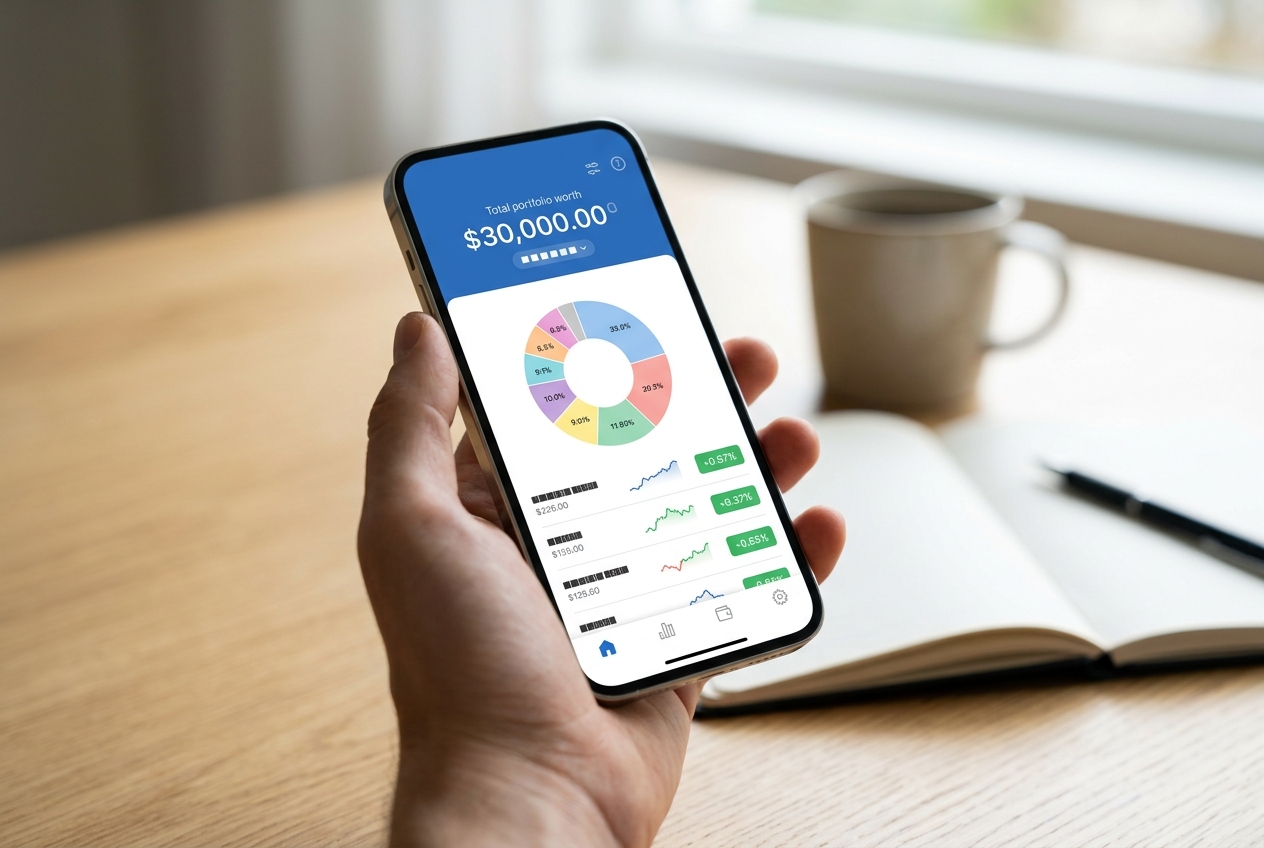
Trading 212 does not try to be a terminal, and it is better for it. The core is a clean watchlist-and-portfolio app with fractional shares from £1, a multi-currency account in 12 currencies, and 24/5 trading on popular US stocks. The feature that keeps people is Pies & AutoInvest: you build a portfolio of up to 50 stocks and ETFs with target weights, and every deposit is split across it automatically, buying more of whatever has drifted below target. It is the closest thing to a robo-adviser that still lets you pick the holdings.
Three things worth switching on, or off, at the start:
- Interest on uninvested cash. Opt in and idle balances earn a variable rate — around 3.55% on GBP and 3.30% on USD when we checked in September 2026 — paid daily. The cash is held in qualifying money-market funds and banks, so read the disclosure: it is an investment, not a bank deposit.
- Share lending. In the Invest account Trading 212 lends your shares to short sellers and pays you half the interest it earns. Dividends still arrive in full. If you would rather not lend, switch it off in the Interest on shares dashboard; it winds down within two trading days.
- The 212 card. A debit card that spends straight from the account with no FX mark-up abroad. Useful if you keep cash on the platform anyway.
The CFD account is a different animal: leverage up to 1:30, an average EUR/USD spread around 1.2 pips, overnight interest on every open position, and a 0.5% FX fee rather than 0.15%. It is fine for occasional index or forex exposure. A dedicated CFD trader will get tighter pricing and proper tooling at Pepperstone. UK residents should also weigh the tax difference against spread betting, covered in Spread betting vs CFDs in the UK.
The fee structure, honestly
| Product | Cost |
|---|---|
| Stocks & ETFs (Invest, ISA, SIPP) | 0% commission; 0.15% currency conversion |
| Stocks & Shares ISA / SIPP | no platform or custody fee |
| CFDs | spread-based (EUR/USD ~1.2 pips), 0.5% currency conversion, overnight interest |
| Deposits | bank transfer free; card and e-wallet 0.7% after €2,000 lifetime |
| Withdrawals | free |
| Inactivity | none |
| UK share purchases | 0.5% stamp duty, plus £1.50 PTM levy on orders over £10,000 (government and exchange charges, not Trading 212’s) |
Interpretation: buying £1,000 of a US stock costs £1.50 in FX, and nothing else, which is a third of the 0.5% conversion at XTB and a fraction of what percentage-fee platforms charge. Buying UK stocks costs only the stamp duty everyone pays. The one trap is the card-deposit threshold, and the fix is simply to use bank transfer. Every charge, with worked examples, is in Trading 212 fees explained. The Cash ISA rate and its FSCS cover are broken down in Trading 212 Cash ISA.
Safety
Trading 212 UK Ltd is FCA-authorised (firm reference 609146), with client money held separately and FSCS protection for eligible UK clients. The group also holds CySEC (398/21), BaFin (10109603), Bulgarian FSC (RG-03-0237) and ASIC (AFSL 541122) licences, so European and Australian clients sit under their own regulators. The company is private, so there are no listed-company accounts to read, but the UK entity files audited results at Companies House and is comfortably profitable.
Two episodes keep our trust score at 8.2 rather than higher. In January 2021 Trading 212 restricted purchases of GameStop and other squeezed stocks, which drew Financial Ombudsman complaints. And between October 2025 and January 2026 it let UK retail clients buy crypto ETNs before it held the FCA permission to do so, applying only after the regulator got in touch; the permission is now on the register. Neither cost clients money; both show a company that moves faster than its compliance function.
The standard warning applies to the CFD side: Trading 212’s own disclosure states that 77% of retail accounts lose money trading CFDs with it. For the full picture of what is and is not protected, including share lending and interest on cash, see Is Trading 212 safe?.
Support: fast chat, no phone
Support runs through 24/7 in-app live chat and email, and it is quick. What it lacks is a phone number, which is why our support score sits at 7.6 rather than with the full-service brokers. The help centre is thorough, and the community forum is unusually active, with staff answering in threads. Education is light compared with XTB: there are explainers, not a structured course.
Verdict
8.7 / 10. For a UK or European investor who wants to own stocks and ETFs cheaply, automate a monthly deposit and earn interest on whatever is not yet invested, Trading 212 is the default answer, and XTB vs Trading 212 shows how narrow the gap is at the top. Copy traders belong on eToro, which eToro vs Trading 212 sets out in detail; anyone who needs options, professional order types or global market depth should read Trading 212 vs Interactive Brokers. If your main activity is leveraged trading, this is not your broker. For how it ranks against every other FCA-regulated platform, see Best trading platforms UK.

Open the official site — check the current terms for your country before depositing.