 WhichBroker
Score breakdown
Scores follow our public methodology — fees 30%, platforms 20%, trust 25%, markets 15%, support 10%. How we score
What we like
- Publicly listed on the LSE with audited financials — rare transparency in the CFD space
- Guaranteed stop-loss orders available on many instruments
- Simple, uncluttered platform that new traders learn in minutes
- Broad regulation across four major jurisdictions
What to watch
- CFD-only in most regions — you never own the underlying asset
- No MetaTrader, no advanced charting for professionals
- Inactivity fee after 3 months without login
The transparency argument
Most CFD brokers are private companies; you take their financial health on faith. Plus500 is a FTSE 250 company listed on the London Stock Exchange, publishing audited accounts every year. If your biggest fear about a broker is “will my money still be there in a crisis,” that listing — plus regulation from the FCA, CySEC, ASIC and MAS — is the strongest answer in the CFD industry. Our trust score of 9.2 is among the highest we award to a CFD-only broker, and it is the single best reason to choose Plus500 over dozens of near-identical spread-based competitors.
Opening an account and getting oriented
Registration is quick: email and password, then the standard KYC identity verification and an appropriateness questionnaire about your trading experience. The minimum first deposit is $100 by card or e-wallet (bank transfers may require more — verify current terms for your country on Plus500’s site). Approval for straightforward cases tends to be fast, and you can explore the full platform in demo mode without depositing at all — the demo is unlimited, which remains rarer than it should be in this industry.
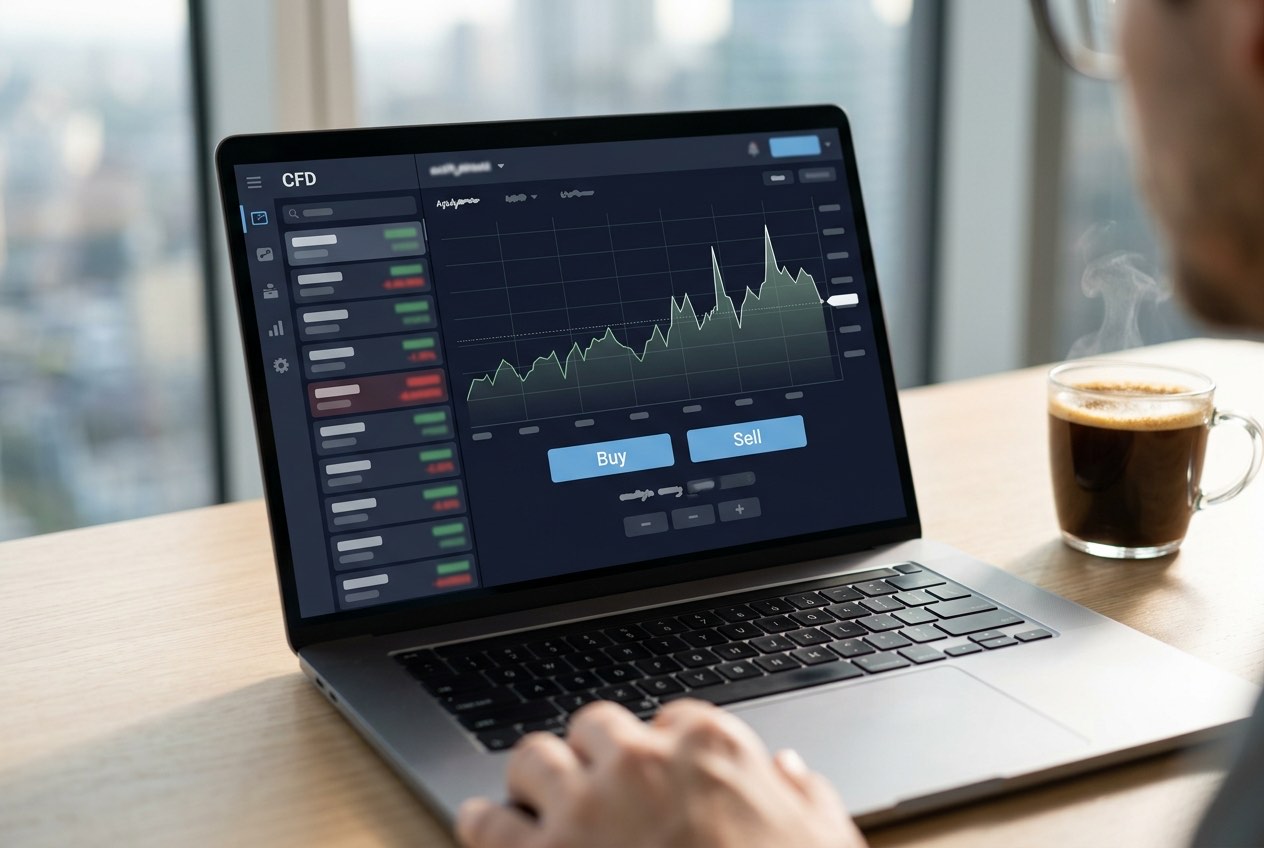
The first thing you notice inside is what’s missing: no plug-in stores, no algorithmic scripting, no forest of configuration menus. The WebTrader platform is intentionally minimal: search an instrument, set the amount, optionally attach a stop, trade. For the casual trader who checks positions on a phone twice a day, that minimalism is the point. For a technical trader who lives in indicators, it will feel like trading in mittens.
The features that actually stand out
Two genuinely differentiating tools deserve attention:
- Guaranteed stop-loss orders (GSLO). For a wider spread, your maximum loss is truly capped — even through weekend gaps and flash moves, which ordinary stops do not protect against. Few competitors offer this at all; for volatile instruments it changes the risk calculus of holding positions overnight.
- Real-time margin alerts. Push and email notifications fire well before liquidation levels, making it genuinely hard to be closed out by surprise. Combined with the clear per-position margin display, Plus500’s risk interface is one of the most beginner-legible in the industry.
Beyond that, the +Insights panel aggregates what other Plus500 clients are trading — interesting color, though contrarians and trend-followers will read the same data opposite ways.
Costs: spreads and the quiet fees
There are no commissions; the spread is the price. Spreads on major instruments are fair but not raw-account territory — an active EUR/USD trader will pay measurably less at Pepperstone or IC Markets. The fees that actually catch people are elsewhere:
| Cost | Detail |
|---|---|
| Spread | built into every quote; varies by instrument and market hours |
| Overnight funding | charged on leveraged positions held past the daily cut-off |
| GSLO premium | wider spread when you attach a guaranteed stop |
| Currency conversion | on instruments quoted outside your account currency |
| Inactivity fee | $10/month after 3 months without login |
Two practical consequences. First, Plus500 is priced for occasional and swing trading, not high-frequency scalping. Second, if you trade only occasionally, set a calendar reminder to log in — the inactivity fee starts after just three months, one of the shorter windows among major brokers.
The structural limitation
Everything on Plus500 in most regions is a CFD. You never own the share, the coin, or the ounce of gold — you hold a contract on its price. That is fine for short-term speculation and hedging; it is the wrong tool for long-term investing, because overnight fees slowly eat buy-and-hold positions, and there are no dividends in the ownership sense (CFD positions receive dividend adjustments instead). In selected regions Plus500 has introduced Invest accounts with real shares, but the core global product remains CFDs.
If you want actual ownership alongside occasional leverage, XTB or eToro offer real stocks next to their CFD ranges — see eToro vs Plus500 for the head-to-head.
Safety, withdrawals and support
Client money is segregated from company funds under each regulator’s rules, and eligible UK/EU clients fall under the respective compensation schemes. Withdrawals go back to the funding method; processing times are reasonable and the platform shows the request status clearly. Support is chat- and email-based — competent for account questions, though there is no phone line and no dedicated account manager tier, which is consistent with the self-service philosophy of the whole product.
The standard CFD caveat applies with full force: the large majority of retail CFD accounts lose money, and Plus500’s own risk disclosure says so. Leverage limits set by the FCA, ESMA and ASIC (typically 30:1 on major FX for retail) exist precisely because of that statistic.
Verdict
8.1 / 10. Unbeatable corporate transparency, the gentlest learning curve in CFDs, and two risk tools (GSLO, margin alerts) that genuinely protect beginners — priced fairly for casual use. Professionals will outgrow the charting in a month, and buy-and-hold investors should choose a different tool for a different job: start with XTB for real-asset investing or Pepperstone for serious forex costs.

Open the official site — check the current terms for your country before depositing.