 WhichBroker
Score breakdown
Scores follow our public methodology — fees 30%, platforms 20%, trust 25%, markets 15%, support 10%. How we score
What we like
- Deepest liquidity and widest coin selection in the industry
- Among the lowest fees of any major exchange
- Full ecosystem: spot, futures, staking, launchpad, card
What to watch
- Regulatory standing differs sharply by country — check yours
- Overwhelming interface for first-time buyers
- Support quality inconsistent at peak times
The scale advantage
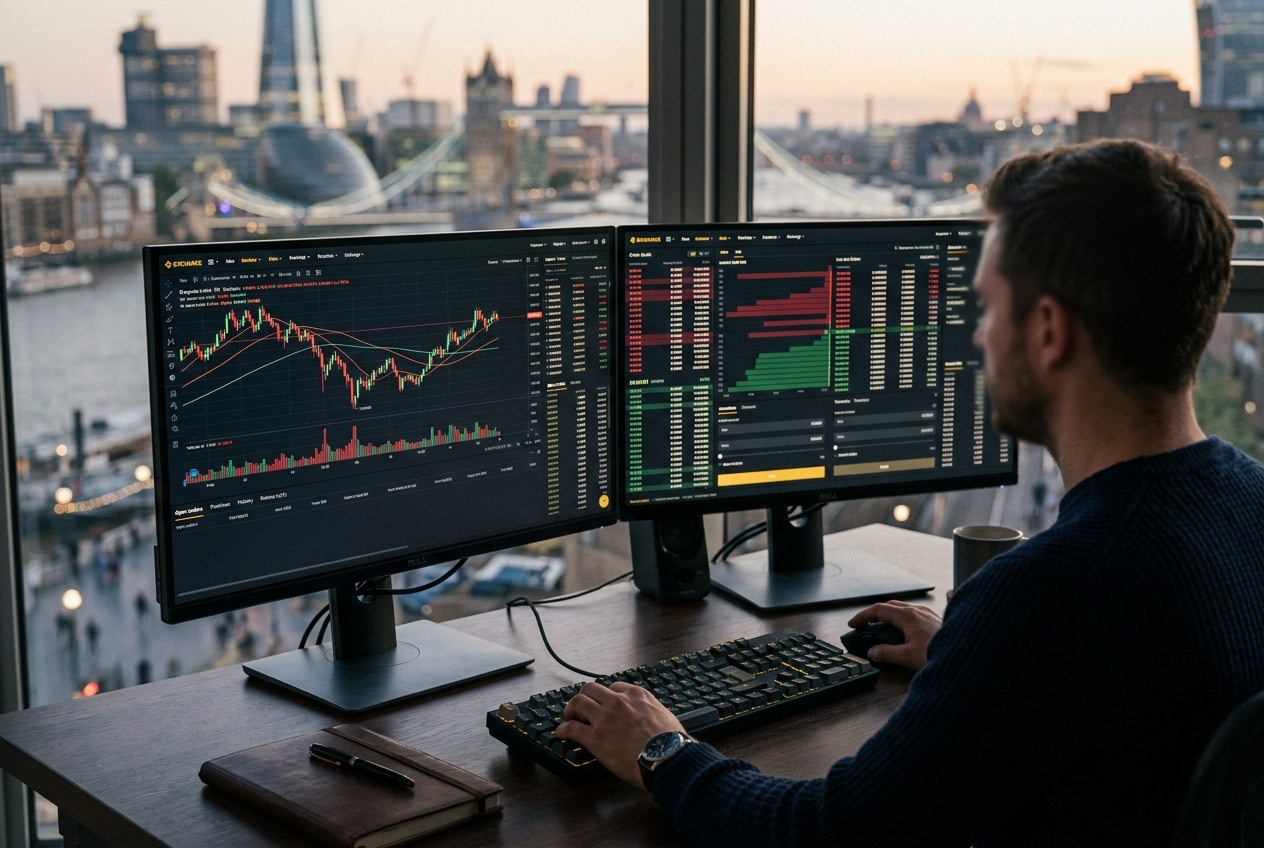
Binance processes more volume than its next several competitors combined. For a trader, scale translates directly into money: the tightest bid-ask spreads in the market, order books deep enough that large orders barely move price, and 350+ listed assets with 1,300+ pairs. If an altcoin trades anywhere, it almost certainly trades here first — and usually with the most liquid book.
Fees compound the advantage. Spot trading starts at 0.1% and drops to 0.075% just by holding BNB and paying fees with it; VIP volume tiers cut deeper. Futures start at 0.02%/0.05% maker/taker. Compare that with the instant-buy pricing many beginners unknowingly pay elsewhere — often several times more per trade — and the fee gap over a year of active trading becomes substantial.
| Product | Fee (entry tier) |
|---|---|
| Spot trading | 0.1% (0.075% with BNB discount) |
| USDT-margined futures | 0.02% maker / 0.05% taker |
| Card purchase of crypto | materially higher — avoid; deposit first, then trade spot |
| Crypto withdrawals | network fee, varies by chain |
Verify current numbers on Binance’s fee schedule — tiers and discounts change.
The regulatory picture — check your country first
This is the section to read before the fee table. Binance’s regulatory standing is a patchwork: licensed or registered in 20+ jurisdictions, restricted or unavailable in others, and the picture changes year to year. The exchange settled major US enforcement actions in 2023 and has invested heavily in compliance since, but our trust score of 7.4 reflects a simple rule: an exchange’s history matters, and Binance’s includes more regulatory conflict than Kraken’s.
Practical advice in three lines: confirm Binance’s status in your country before depositing; make sure you are onboarded to the entity licensed for your region (the EU MiCA-regulated arm, for example, is a different legal counterparty than the global exchange); and treat any exchange — this one included — as a trading venue, not a long-term vault.
Getting started: account, KYC, first deposit
Registration takes minutes; full KYC (ID document plus liveness check) is mandatory before trading. Once verified, the cheapest route in is almost always a bank or stablecoin deposit followed by a spot trade — the convenient-looking card purchase buttons carry much higher effective costs.
New users should immediately do three things in the security settings: enable two-factor authentication with an authenticator app (not SMS), set a withdrawal address whitelist, and turn on the anti-phishing code that stamps genuine Binance emails. These three switches remove most of the common attack surface on any exchange account.
Using it as a beginner vs. as a trader
The honest answer: Binance is built for people who already know what they’re doing. The app’s “Lite” mode helps, but the full product is an airport cockpit — spot, margin, futures, options, earn products, launchpad, a Web3 wallet, dual investment, liquidity pools. Each has its own risk profile, and the interface does not always make clear where “saving” ends and “structured derivative” begins. A first-time buyer who just wants €100 of Bitcoin will have a calmer experience at Kraken — the trade-offs are itemized in Binance vs Kraken.
An active trader, by contrast, will find everything here and pay less for it: fast matching, every order type that matters, portfolio-margin for sophisticated accounts, and an API robust enough to run serious automation. The TradingView-style charting in the web terminal is genuinely good, and liquidity means fills at the price you see.
Earn products, staking and the fine print
Binance Earn aggregates flexible savings, locked staking, and more exotic structured products. The flexible tiers on major assets are a reasonable way to earn on idle balances; the double-digit headline rates further down the list always carry conditions — lockups, caps, or products whose payoff depends on price movement. Read what instrument you are actually buying. Rule of thumb: if the yield needs a diagram, it is not savings.
Custody and the self-custody caution
Binance publishes proof-of-reserves attestations for major assets and maintains an emergency insurance fund (SAFU). Both are better than nothing; neither equals the legal protections of a regulated bank account, and exchange failures across crypto’s history all looked fine until they didn’t. The standing advice for every exchange applies with extra force at the largest one: keep on the platform what you actively trade, and move long-term holdings to a hardware wallet you control. Withdrawal whitelists make routine transfers to your own wallet painless.
Verdict
8.5 / 10. The best price and selection in crypto, with a trust discount you should manage deliberately: verify local availability, enable every security feature, and self-custody what you don’t trade. Security-first holders should weigh Kraken; derivatives specialists comparing venues will want Binance vs Bybit; and Binance vs OKX covers the closest all-round rival.

Open the official site — check the current terms for your country before depositing.